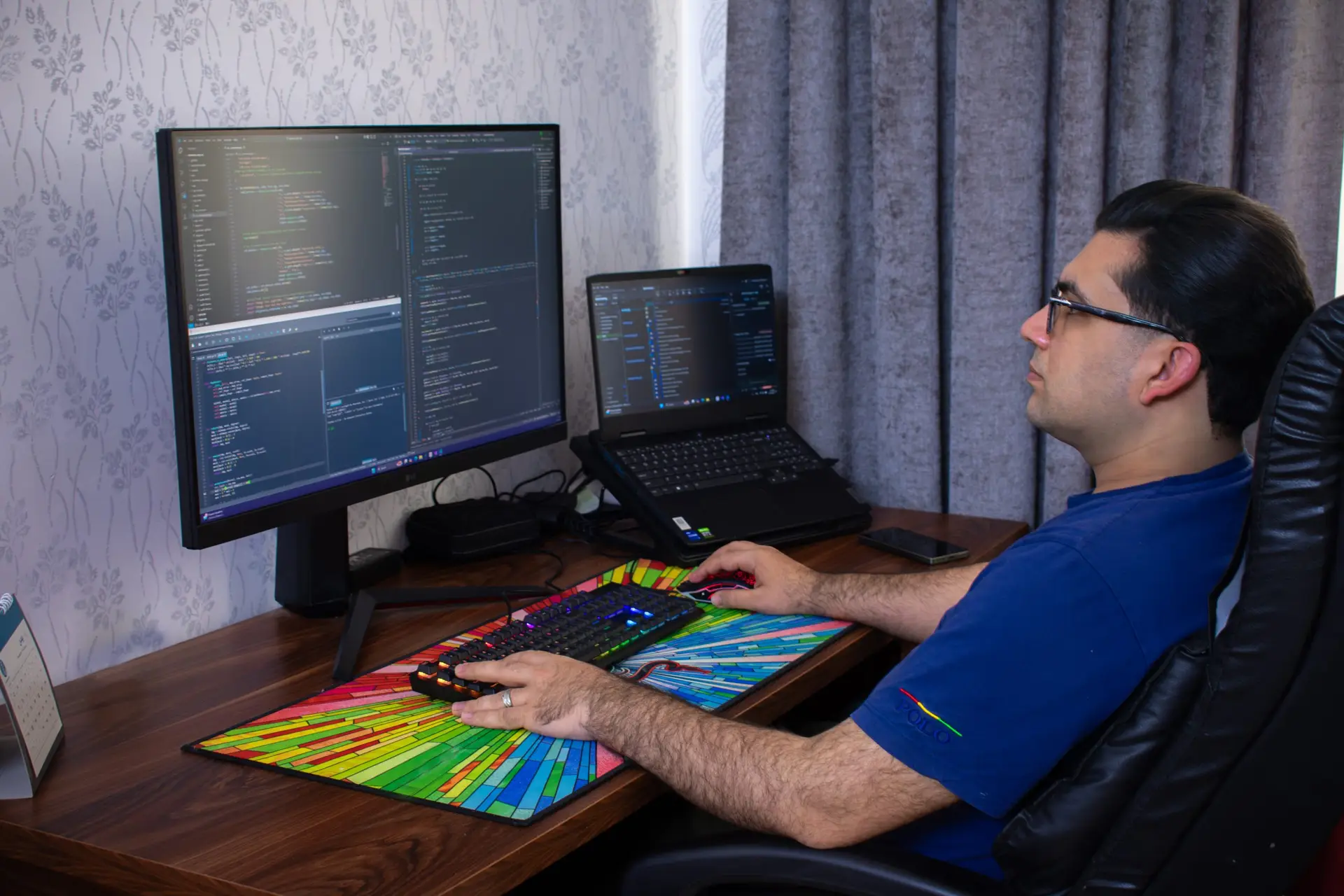
Design and Implementation of Desktop Software
The design and implementation of desktop software is a multi-stage process that includes requirements analysis, user interface design, database construction, coding, and final testing. These stages, each with their own level of importance and impact on the final quality of the software, are described below:
Requirements Analysis
The first stage in software design is requirements analysis. In this phase, developers communicate with end users and stakeholders to identify their needs and expectations. This analysis includes examining existing problems, identifying necessary features, and defining the software’s objectives. Documenting these requirements is essential, as it serves as a reference for subsequent stages.

User Interface Design
After the requirements analysis, the user interface (UI) design phase begins. The UI should be designed so that users can interact with the software easily. This involves choosing colors, fonts, layout, and design patterns. Considering user experience (UX) in this phase is crucial, as a user-friendly interface greatly influences user satisfaction and efficiency.
Database Construction
Desktop software often requires a database to store and manage information. In this stage, the design and implementation of the database take place. The choice between a relational or non-relational database depends on the software’s needs and data volume. Designing tables, relationships, and indexes are among the main tasks in this phase.
Programming
In the programming stage, the software is developed using appropriate programming languages. Languages such as C#, Java, Python, and C++ are commonly used for this purpose. Coding involves implementing business logic, database interactions, and the user interface. This phase requires precision and attention to detail to ensure the software operates correctly and without errors.

Final Testing
Once coding is complete, the software must undergo various tests, including performance testing, security testing, and usability testing. The purpose of these tests is to identify and fix issues and ensure that the software functions properly. Final testing helps developers confirm that the software is ready for release.
Conclusion
The design and implementation of desktop software is a complex, multi-step process that requires close collaboration between developers and users. By focusing on user needs and experience, and paying attention to detail at each stage, the software can achieve success and user satisfaction. Ultimately, a successful desktop application should deliver both high performance and an excellent user experience.